




Introduction
When choosing a projector, the same question almost always arises: should I opt for the technology LCD or DLP?
These two technologies have dominated the market for many years, and each offers specific advantages. However, behind these technical terms lie important differences that can significantly influence the image quality, the durability and the use of its installation. Understanding these differences is essential to making the right decision.
LCD technology: operation and features
Technology 3LCD It is based on the use of three independent panels, each dedicated to a primary color: red, green and blue. Light passes through these panels and the image is recreated by combining these three flows.
Color reproduction on LCD screens
Thanks to this mechanism, the colors are natural, balanced and faithful.
- violet = red + blue
- white = red + green + blue
This technology is especially valued for the presentations, the detailed visual content and the professional environments.
The limitations of the LCD screen
The main drawback of LCD screens lies in their handling of black. Even when the image should be black, light still passes through and the Blacks appear as dark gray. The result is a less marked contrast and a loss of depth in dark scenes.
Useful life
LCD screens have an average lifespan of between 7,000 and 10,000 hours (depending on temperature, ventilation and use).
DLP technology: operation and features
DLP (Digital Light Processing) technology works in a completely different way. It uses micromirrors that reflect or block light. The result is that the Black corresponds to a total absence of light and the white to maximum reflection. This allows you to obtain a very high contrast.
DLP image reproduction
Main advantages: Deep blacks, high contrast, sharp and dynamic image. Main limitation: the colors are generated by a rotating RGB filter, This sometimes makes the colors less intense, especially in monochromatic DLP models.
Mono DLP vs 3DLP: a key difference
Mono DLP
Use a single chip and a rotating RGB filter.
- Advantages: Affordable price, good durability.
- Disadvantages: less accurate colors.
3DLP
Use 3 sensors (one per color) without rotating filter.
- Result: Exceptional image quality, perfect colors, deep blacks, and a high level of brightness.
- Inconvenient: very high cost (up to €70,000).
DLP lifespan
DLP systems offer a longer lifespan: up to 20,000 hours. They are ideal for a intensive use and for professional facilities.
Quick comparison: LCD vs. DLP
- Colors: LCD (very accurate) / DLP (adequate to excellent)
- Contrast: LCD (medium) / DLP (very high)
- Black: LCD (gray) / DLP (deep black)
- Shelf life: LCD (7,000 – 10,000 h) / DLP (up to 20,000 h)
- Intensive use: LCD (medium) / DLP (excellent)
Which option should you choose depending on how you intend to use it?
Regular use (offices, meetings, presentations)
Recommended LCD for its faithful color reproduction, pleasant visuals and good value for money.
Intensive use (museums, continuous display, digital signage)
DLP is recommended due to its greater durability and lower maintenance requirements.
High-end uses (cinema, simulation, immersive experiences)
3DLP is recommended to obtain the highest quality and a perfect result.
A very common mistake
Choosing based solely on price or on a technical specification sheet can tarnish the experience, to cause eye strain or limit the impact of your content.
Specific cases
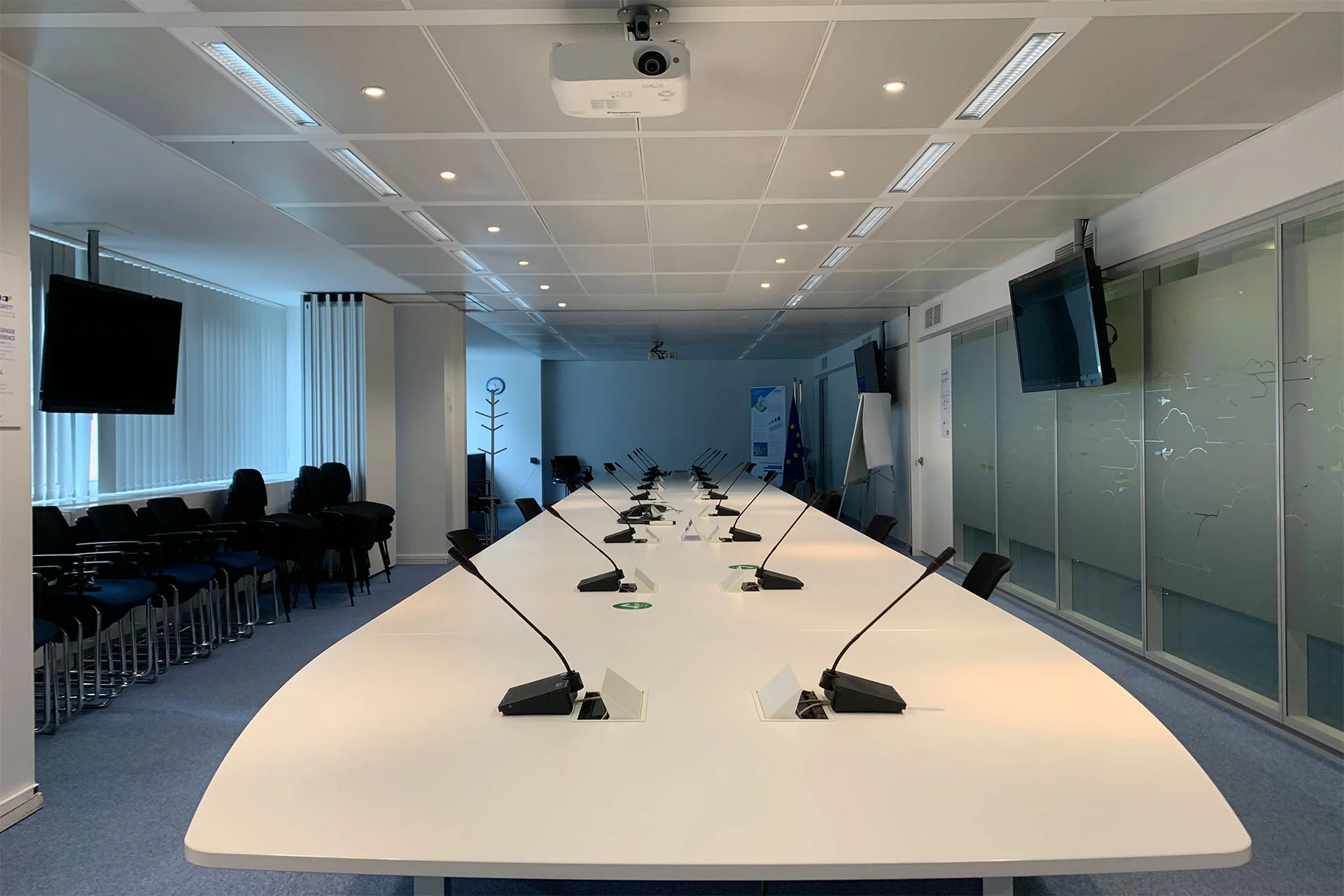
- Company meeting room (4 to 8 hours of use per day, PowerPoint/video conferencing): Recommended LCD.
- Museum / exhibition (7-day-a-week use, continuous projection): Recommended DLP.
Conclusion: LCD or DLP?
There is no single "best" technology that works for everything. The right choice depends on your needs. use, from your frequency of use and of your budget.
The opinion of the AV Application experts
At AV Application, we never choose a technology "by default." We analyze its around, his use and their limitations to offer you the best solution appropriate, sustainable and effective.