




Introduction
When we talk about audiovisual installations —whether for a meeting room, a home cinema or a professional space—, the issue of resolution is fundamental.
Is it better to choose 2K or 4K?
Although 4K is ubiquitous in marketing discourse these days, the reality on the ground is often quite different. Between the available content, the technologies used, and the actual needs of users, the choice deserves careful consideration.
2K vs 4K: Understanding the Differences
2K resolution corresponds to a definition of1920 x 1080 pixels, also known as Full HD.
It became widespread in the 2000s with the arrival of Blu-ray players, consoles like the PS3 or the Xbox, and the first high-definition screens.
For its part, 4K resolution corresponds to 3840 x 2160 pixels (UHD), that is, four times more pixels than 2K.
Specifically, this means:
But is that difference still visible? Not necessarily.
4K: a promise that needs qualification
Today, contrary to what one might think: Most of the available content is still in 2K
Movies, presentations, professional content… Native 4K still represents a relatively small share (around 15% of the market).
Direct consequence: most 4K devices use a technology called upscaling.
Upscaling: the fake 4K?
Heupscaling consists oftransform a 2K image into 4Kartificially multiplying the pixels.
Result:
Depends:
That's why two 4K devices can offer very different results.
Monitor versus projector: two different approaches
Monitors (screens)
Nowadays, as soon as the 32 inches, 4K has become a standard.
Because?
In this case, the question hardly even arises: 4K is recommended.
Projectors
In the case of projectors, the reality is different:
In a standard image, the difference may be barely noticeable.
What criteria should be taken into account when choosing?
The choice between 2K and 4K should never be based solely on resolution.
Keep in mind:
1. The type of content
2. Image size
3. Viewing distance
4. The budget
Specific case
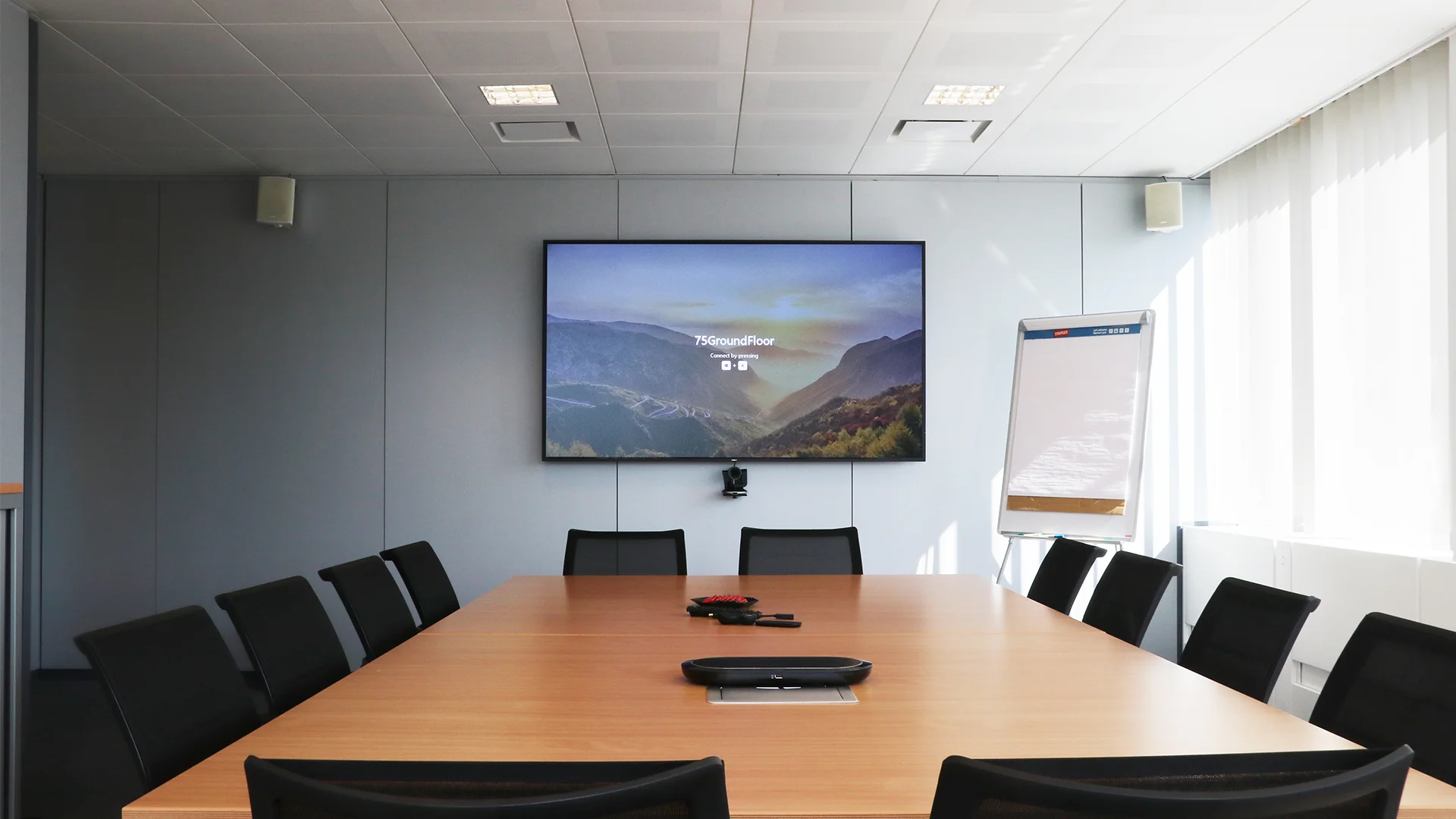
Classic meeting room in a company:
Result: 2K resolution is more than sufficient in 90% of cases.
High-end conference room or exhibition hall:
Results: 4K is interesting
The most common mistake
Many companies opt for 4K just to "look modern".
Problem:
A good configuration depends not only on the resolution, but on the entire system.


Conclusion: 2K or 4K?
In summary:
The good choice depends on each day:
The opinion of the AV Application experts
At AV Application, we always recommend a customized approach.
Instead of following trends, we analyze your needs to offer you the most suitable solution.